

Search
Close this search box
[email-subscribers-form id="1"]

RHIZOME : Designing Sustainability for the Global South

DECOR | 20th Sept, 2025

“Inside India’s first sustainability design studio that has been shaping systems, not just products, since 2009.”

Credits: RHIZOME
Credits: RHIZOME
Credits: RHIZOME
Credits: RHIZOME
Credits: RHIZOME

Back in 2009, while the design world in India was still caught up with shiny surfaces and mass production, Dr. Rebecca Reubens quietly set up shop in Ahmedabad with a contrarian idea: sustainability should not be an afterthought, it should be the foundation. What looked like an idealistic gamble then has matured into Rhizome, one of the most consistent voices in the Indian design landscape.

Her background explains the clarity. Rebecca trained at NIFT Delhi, studied at NID Ahmedabad, and then went deep into the mechanics of sustainability through a PhD at Delft University of Technology. By the time she launched Rhizome, she wasn’t playing catch-up with the sustainability discourse in Europe, she was rewriting it for the realities of the global south.

A Studio Named After a Plant, But Built Like a Network

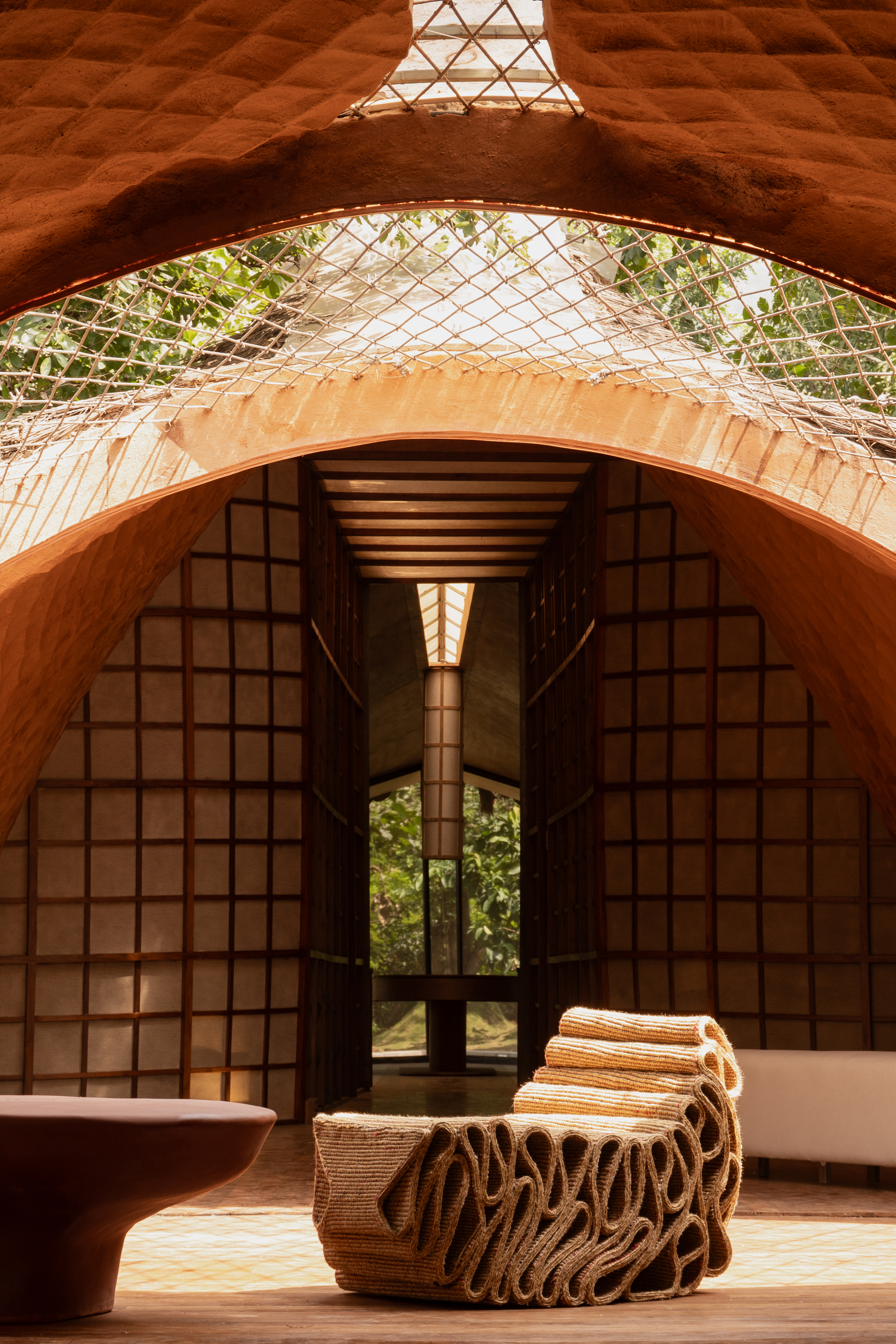
If the name Rhizome sounds academic, that’s because it is. But it also carries a sharp metaphor. A bamboo rhizome doesn’t grow linearly; it spreads underground, branches unpredictably, and sustains itself by connecting with other stems. That’s exactly how this studio works. Instead of pushing a top-down design ideology, Rhizome behaves like a network collaborating with craftspeople, researchers, brands, and communities while keeping independence intact.

It’s less about designing an object and more about designing relationships between ecology, economy, and culture. This decentralization is not branding fluff; it’s how their projects stay relevant across industries, from furniture to jewellery to consultancy.


Designing Beyond the Eco Buzzwords

The biggest strength of Rhizome is its refusal to shrink sustainability into a narrow checklist. Recycling, carbon offsets, or bamboo furniture while useful are just fragments. Rhizome’s work insists on treating sustainability as an interconnected whole. A product has to make sense for the environment, yes, but it also has to keep a community employed, a tradition alive, and a business running.

Credits: RHIZOME
Credits: RHIZOME
Credits: RHIZOME

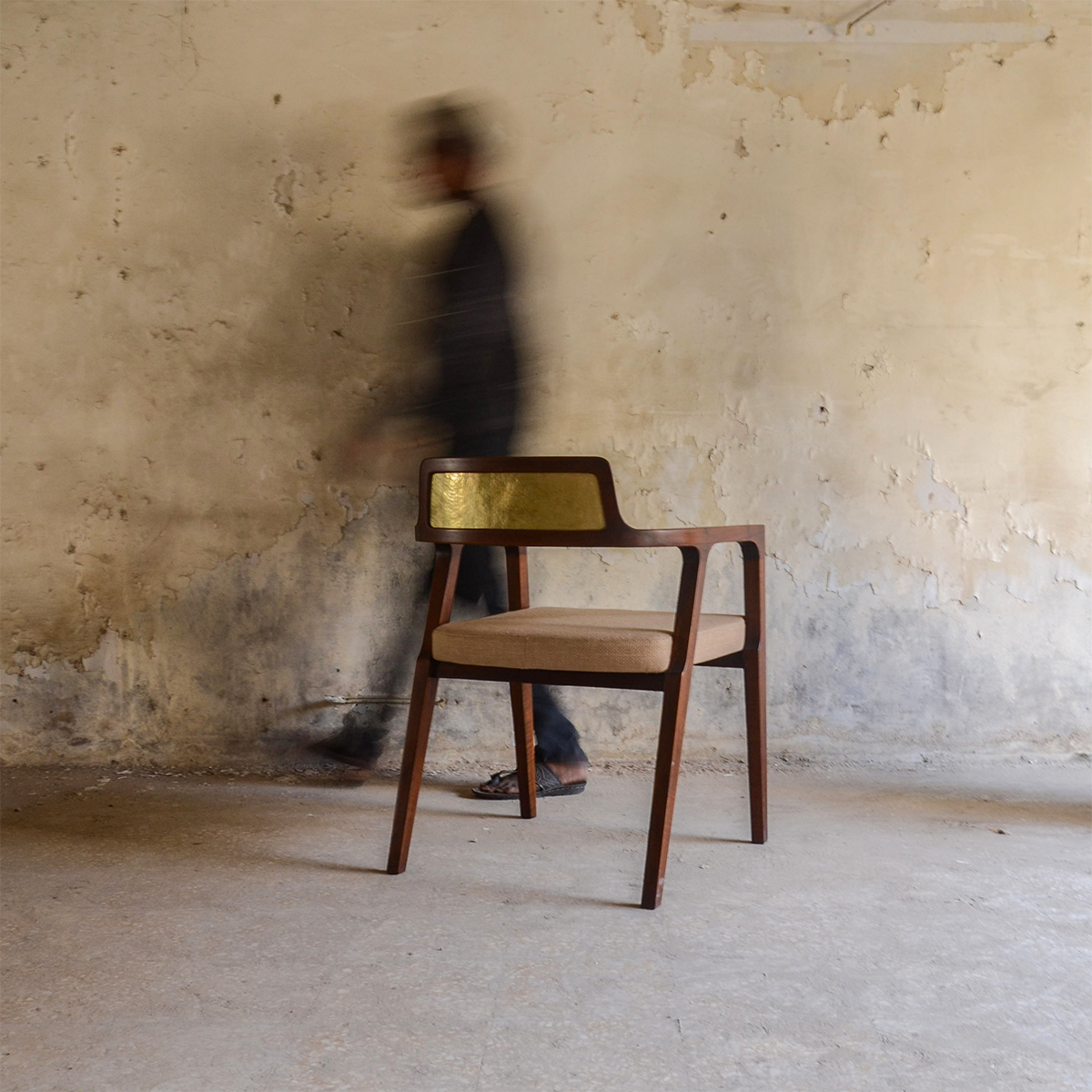
This is why their practice operates across three active fronts. Furniture, through their in-house label that experiments with sustainable luxury. Jewellery, under the brand Baka, which flips adornment into an exercise in ethics and transparency. And consultancy, where the studio guides larger institutions to embed sustainability into their strategy instead of adding it as a footnote.

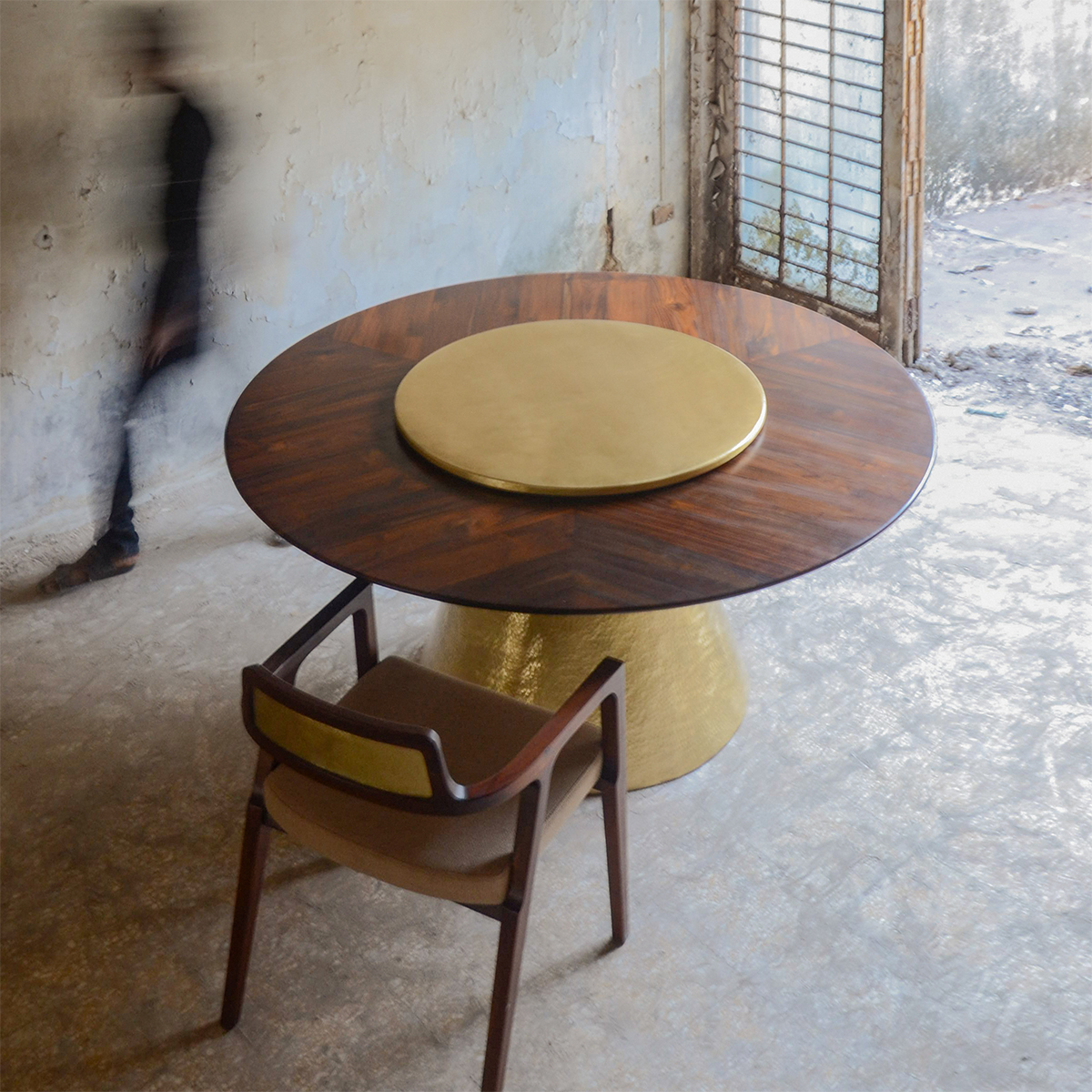
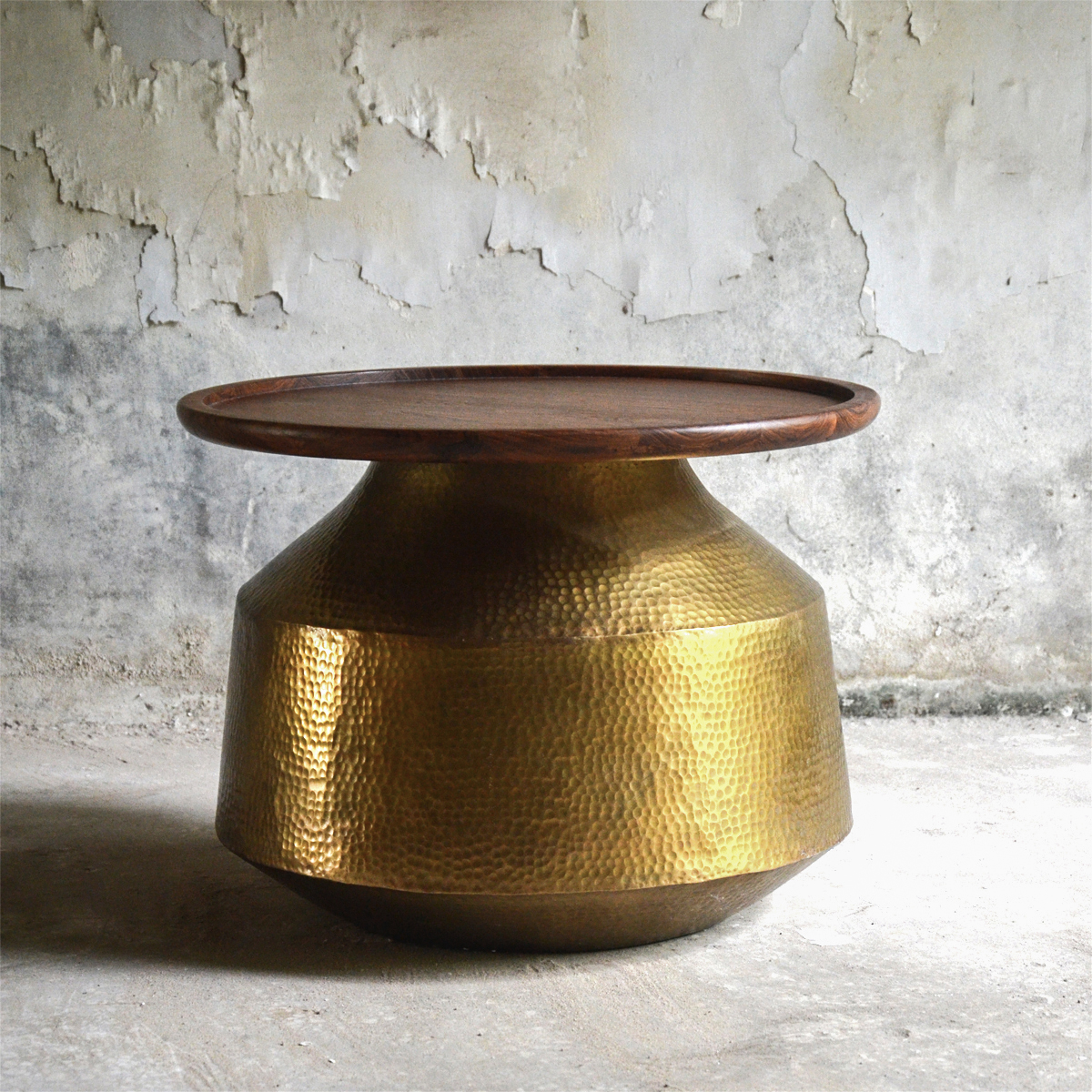
This thinking comes alive in their Lota and Mathaar collections. The Lota series reimagines the iconic Indian lota as contemporary furniture, developed with the few remaining Thathera craftspeople still practicing the dying art of hand-hammering brass. Each piece blends brass components with reclaimed teak tops salvaged from demolished Pol houses in Gujarat, their grain patterns telling a story of age and continuity. The Mathaar collection pushes the same craft lineage into non-traditional architectural forms, again balancing brass with reclaimed teak. Together, these collections demonstrate how Rhizome preserves endangered crafts without freezing them in nostalgia, placing them instead in living rooms where tradition evolves into modern use.

Leadership That Balances Idealism With Operations

Every studio has vision, but not every studio survives the grind. Rhizome balances both. Rebecca brings the design and sustainability depth, she is also a World Bamboo Ambassador, an educator across Indian design schools, and a published author with The Routledge Handbook of Craft and Sustainability in India shaping discourse in academia. In 2022, she was joined by Col. Rohit Tyagi, who had already spent over two decades leading operations in the Indian Army. With his management background from MDI Gurgaon, he brought process, speed, and structure to the studio. If Rebecca is the compass, Rohit is the engine. Together, they’ve made Rhizome not just a design practice but an organization capable of scaling its philosophy.

Why It Resonates Now

Fifteen years ago, Rhizome’s vocabulary felt premature for most Indian clients. Today, with climate consciousness creeping into consumer expectations and boardroom agendas, their early bets feel prescient. The studio’s relevance doesn’t come from chasing trends but from staying grounded in context. While many sustainability conversations in India still get imported from the West, Rhizome has always argued for frameworks that make sense in the south. Their work answers the uncomfortable question: can sustainability exist in a country still negotiating basic needs? Their answer is yes, but only if you look at the entire system- craft, culture, economy, and ecology together.

Not a Movement, But a Method

What makes Rhizome stand out is its consistency. It doesn’t preach sustainability like a movement, nor does it dress it up as a marketing campaign. It treats it as method. Each project, whether a piece of furniture or a strategy for an organization, is approached as a node in a larger network. Break the node, and another grows elsewhere, just like the bamboo rhizome.

At a time when the word “sustainable” is printed on almost everything, Rhizome offers proof that it can mean more than packaging. The studio is not in the business of slogans; it’s in the business of systems. And that might just be why it still feels relevant fifteen years later.

Rhizome.Design.Studio

Furniture & Objects

Things Rhizome Doesn’t Do

❌ Greenwashing
❌ One-size-fits-all “eco” solutions
❌ Treating sustainability like a Pinterest trend
They design systems, not PR campaigns.

Quick Hits on Rebecca

  • Degrees: more than your average startup founder

  • Global projects: Asia, Africa, Europe

  • Titles: World Bamboo Ambassador, Author, Educator

  • Energy level: Could probably power an entire bamboo forest.
  •  
  • Bamboo > Plastic

    • Stronger than steel in tension

    • Grows faster than your WiFi resets

    Absorbs more carbon than most “eco” slogans
    No wonder Rebecca built a career around it.
Explore More

BONAFIDE is a digital design platform that goes beyond aesthetics. We spotlight the thinking, intent, and craft behind
meaningful design- not just the finished product. From architecture and interiors to product design and independent
brands, we cover work that challenges the norm and pushes ideas forward. Our content is visually sharp, editorially
bold, and purpose-driven. We ask better questions, tell smarter stories, and put creative minds in focus. If you’re
building something original with substance and clarity, we’re the platform that gets it, and tells it like it is.

BONAFIDE is a digital design platform that goes beyond aesthetics. We spotlight the thinking, intent, and craft behind meaningful design- not just the finished product. From architecture and interiors to product design and independent brands, we cover work that challenges the norm and pushes ideas forward. Our content is visually sharp, editorially bold, and purpose-driven. We ask better questions, tell smarter stories, and put creative minds in focus. If you’re building something original with substance and clarity, we’re the platform that gets it, and tells it like it is.

Receive the latest news

Subscribe To Our Weekly Newsletter

Get notified about new articles