ARCHITECTURE | 18th Jan, 2026
Studio Nirvana designs a 20,000 sq. ft. vacation residence shaped by preserved mango trees, carved voids, and a minimalist planning logic built for mental clarity.
Zen House is a vacation residence in Palakkad, Kerala, designed to do more than provide shelter. The project is positioned as a sanctuary, built for rest, clarity, and a slower pace of living. It is designed to feel less like a conventional holiday home and more like a controlled environment where architecture reduces noise, simplifies daily movement, and makes space for calm. Zen House is a vacation residence in Palakkad, Kerala, designed to do more than provide shelter. The project is positioned as a sanctuary, built for rest, clarity, and a slower pace of living. It is designed to feel less like a conventional holiday home and more like a controlled environment where architecture reduces noise, simplifies daily movement, and makes space for calm. Designed by Avinash Joshy, Joshy Jose, and Steffy Thomas, the principal designers at Studio Nirvana, Zen House is guided by Zen philosophy without turning it into a theme.
At the core of the concept is a minimalist design philosophy grounded in Zen principles of simplicity, harmony, and connection to nature. Here, minimalism is not used as a styling language. It is used as a working strategy to eliminate clutter, reduce stress, and support mental stillness. The design avoids unnecessary objects, visual noise, and forced detailing so that the architecture holds its own through proportion, light, and spatial sequencing. “The project is not just a house; it is an experience designed to function as a sanctuary” says Avinash Joshy.
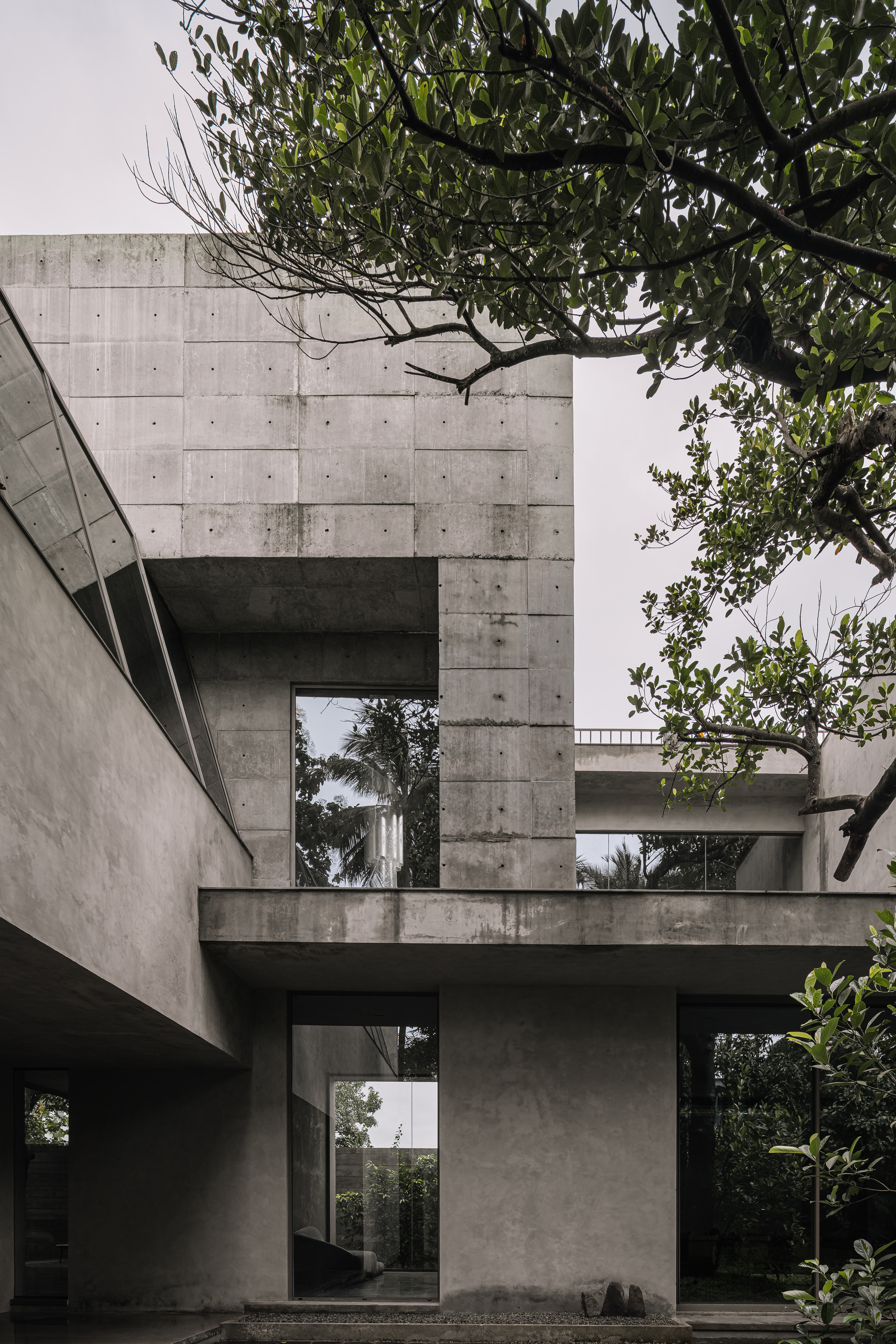
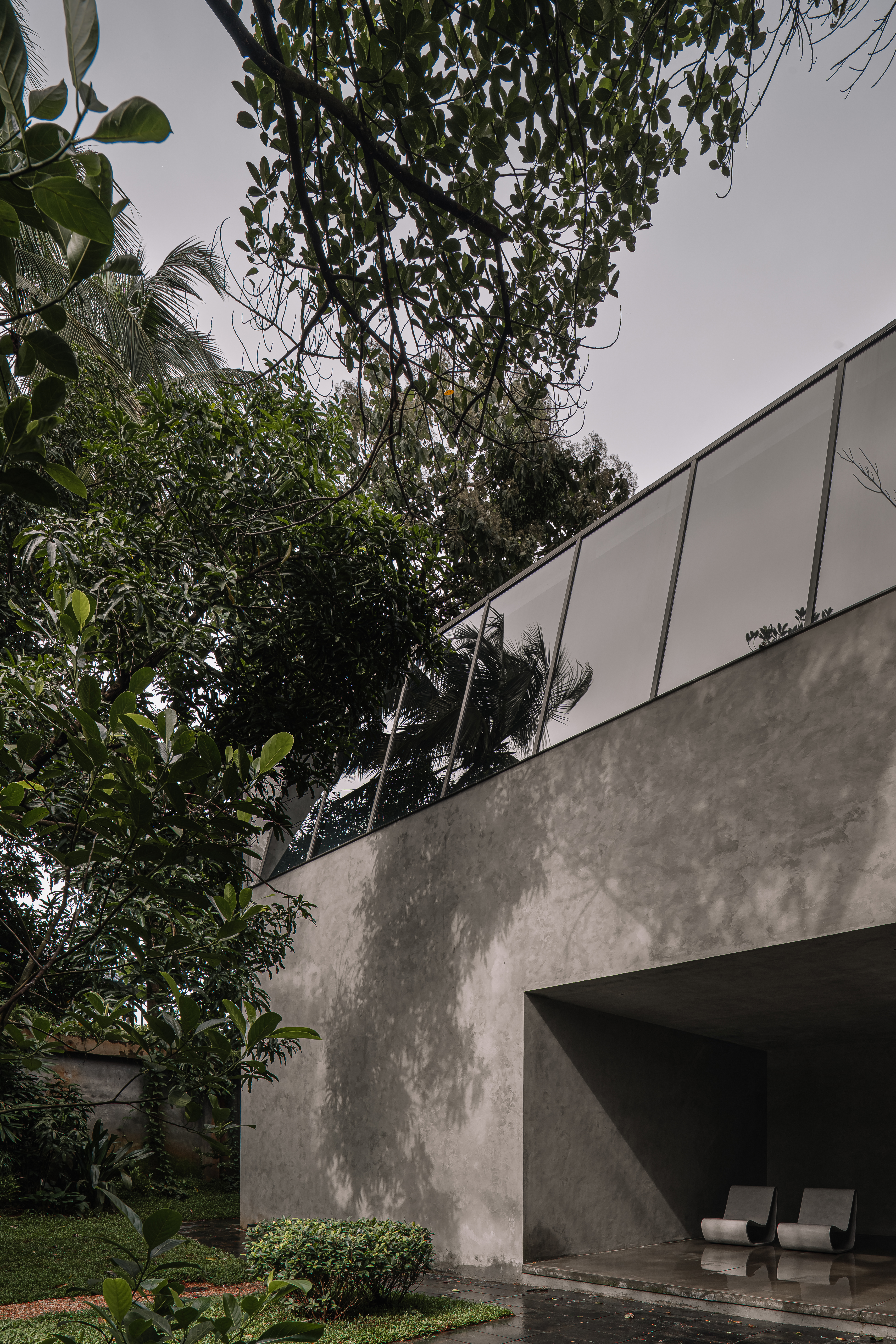

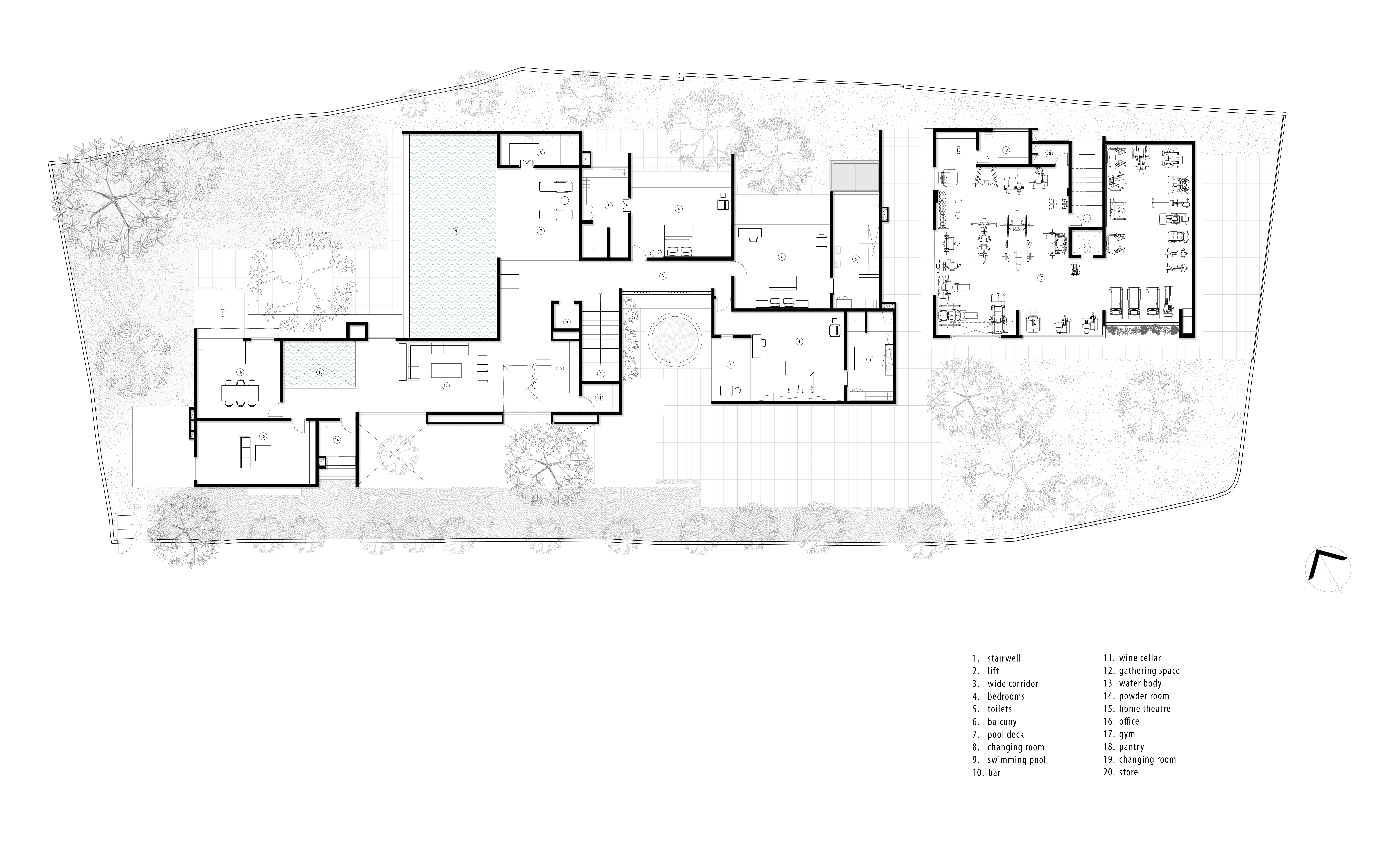
The site spans over half an acre and includes a strong existing plantation of mature mango and jackfruit trees, among others. Studio Nirvana chose to preserve these trees as primary architectural elements rather than treating them as background landscaping. Branch cutting was avoided, and the built form was developed to wrap around the existing growth. This decision directly influenced the zoning of the house, with common spaces organised around a dominant mango tree on one part of the site and the private bedroom zones grouped near a cluster of trees on the other end.
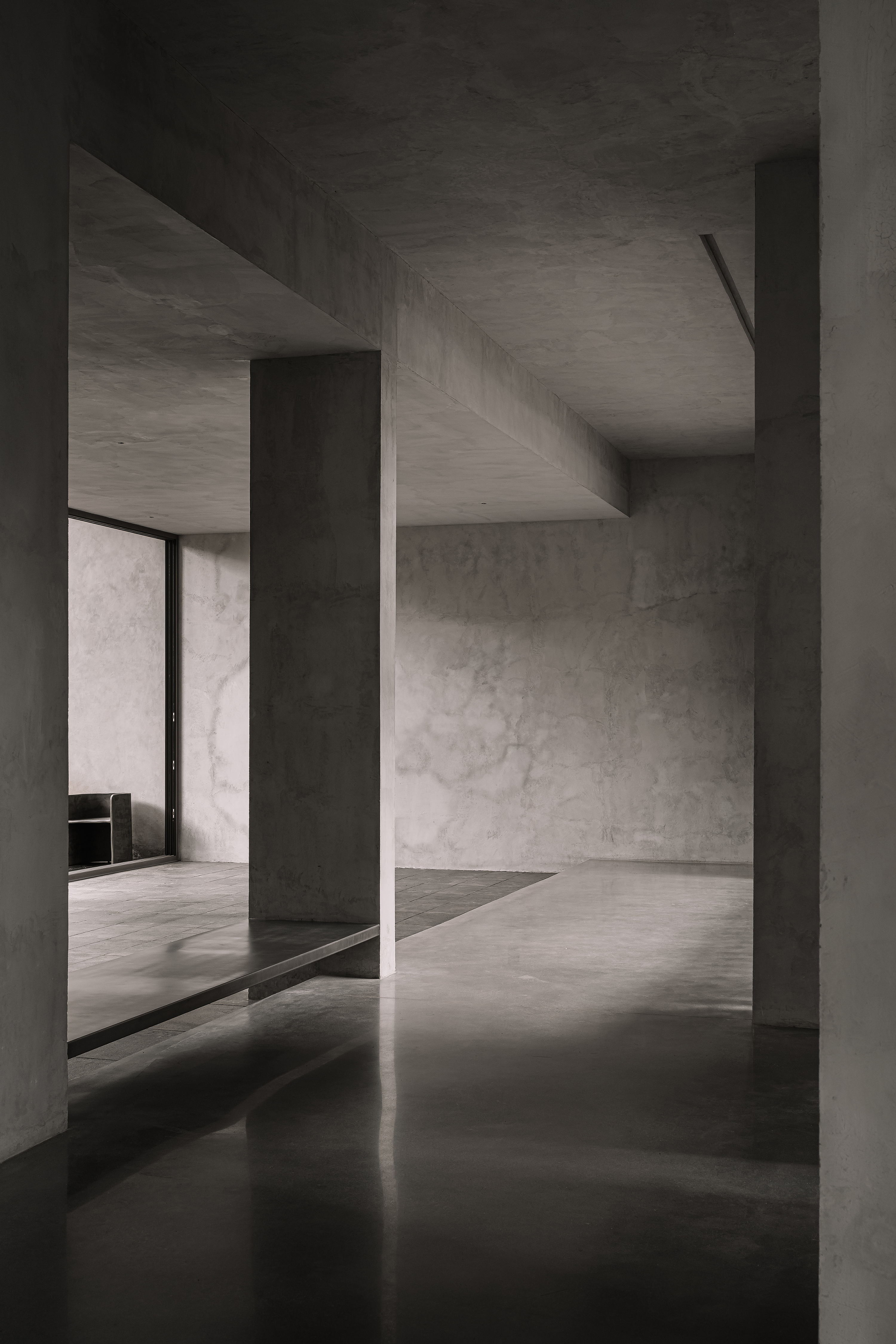
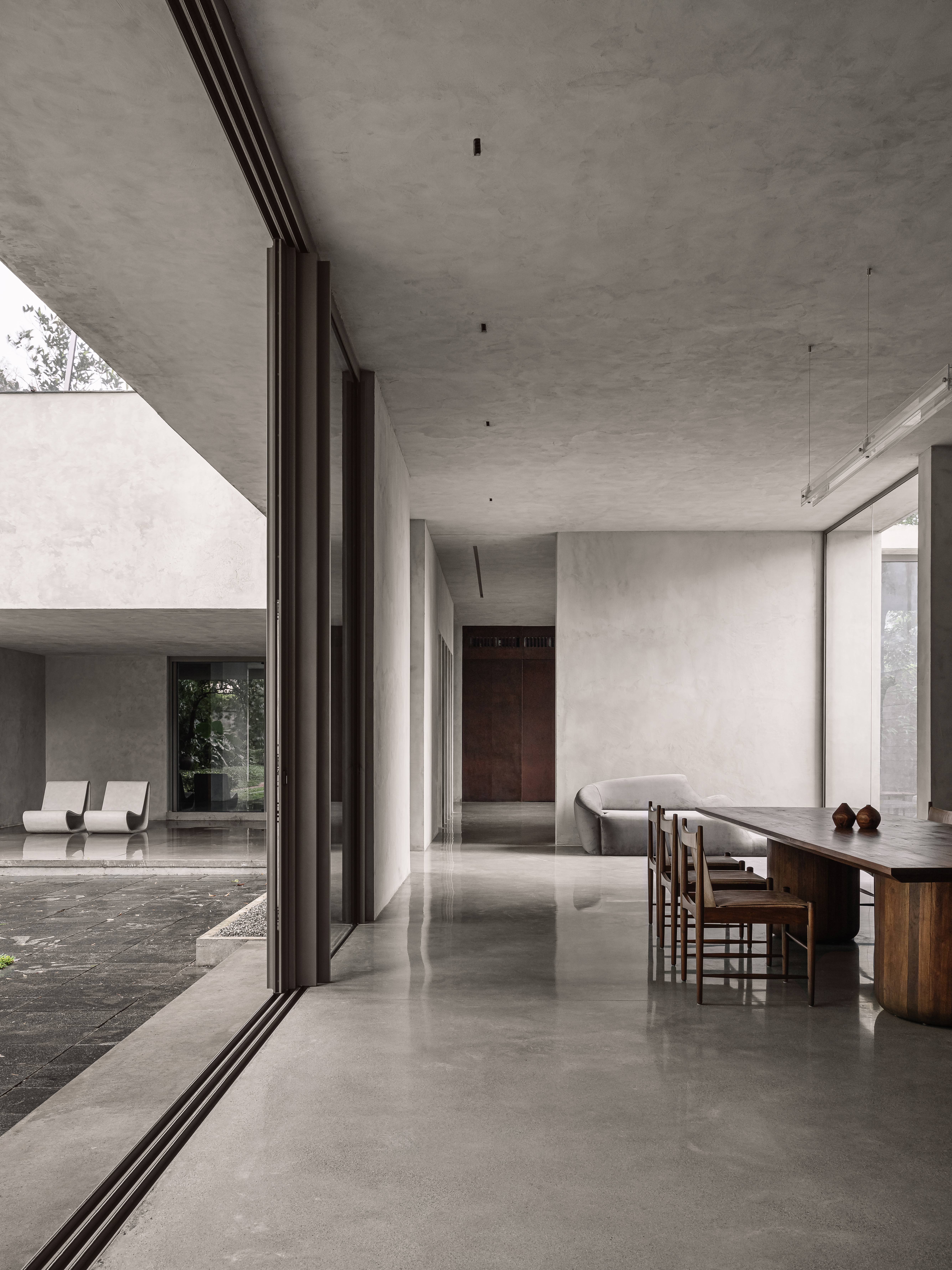
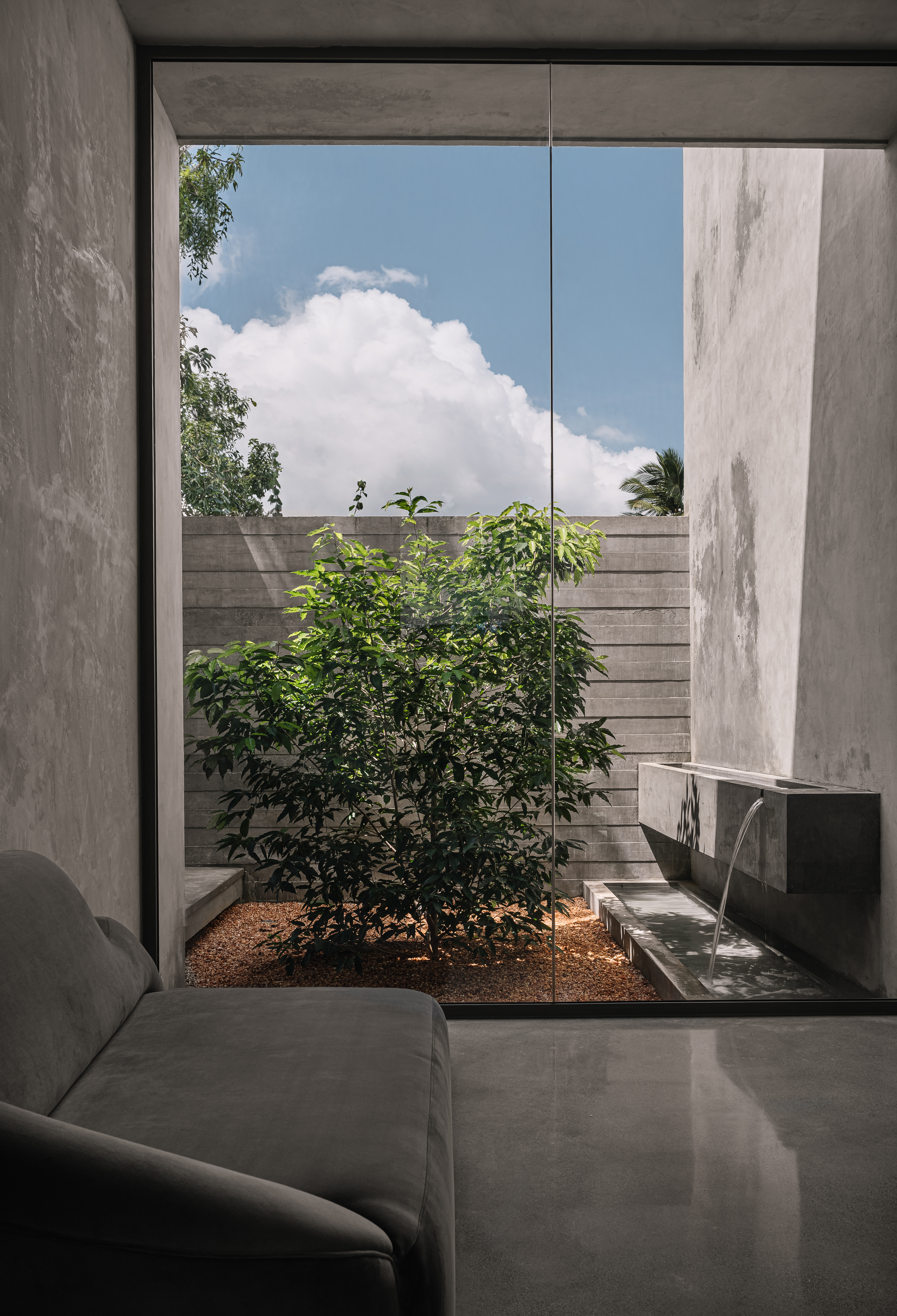
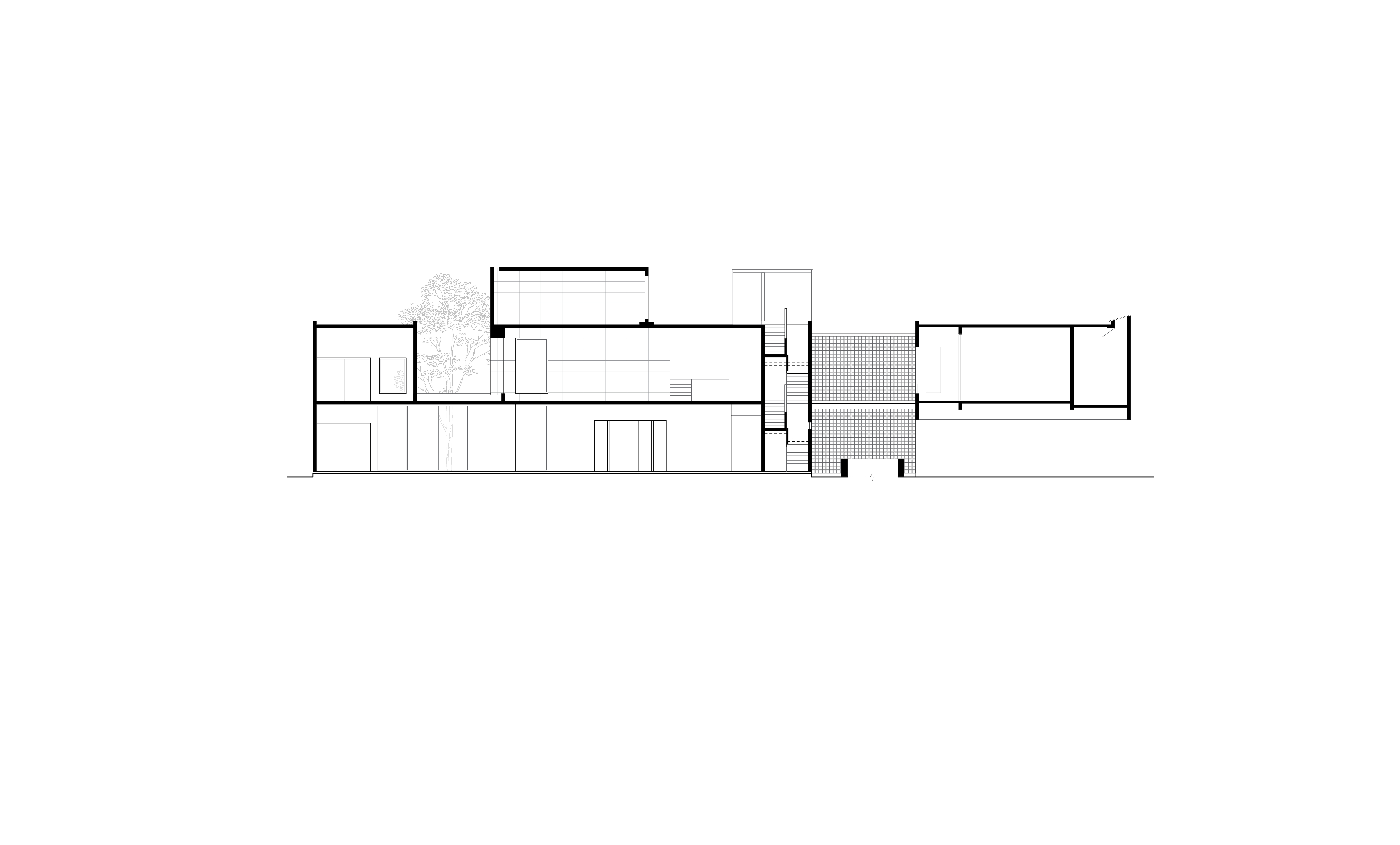
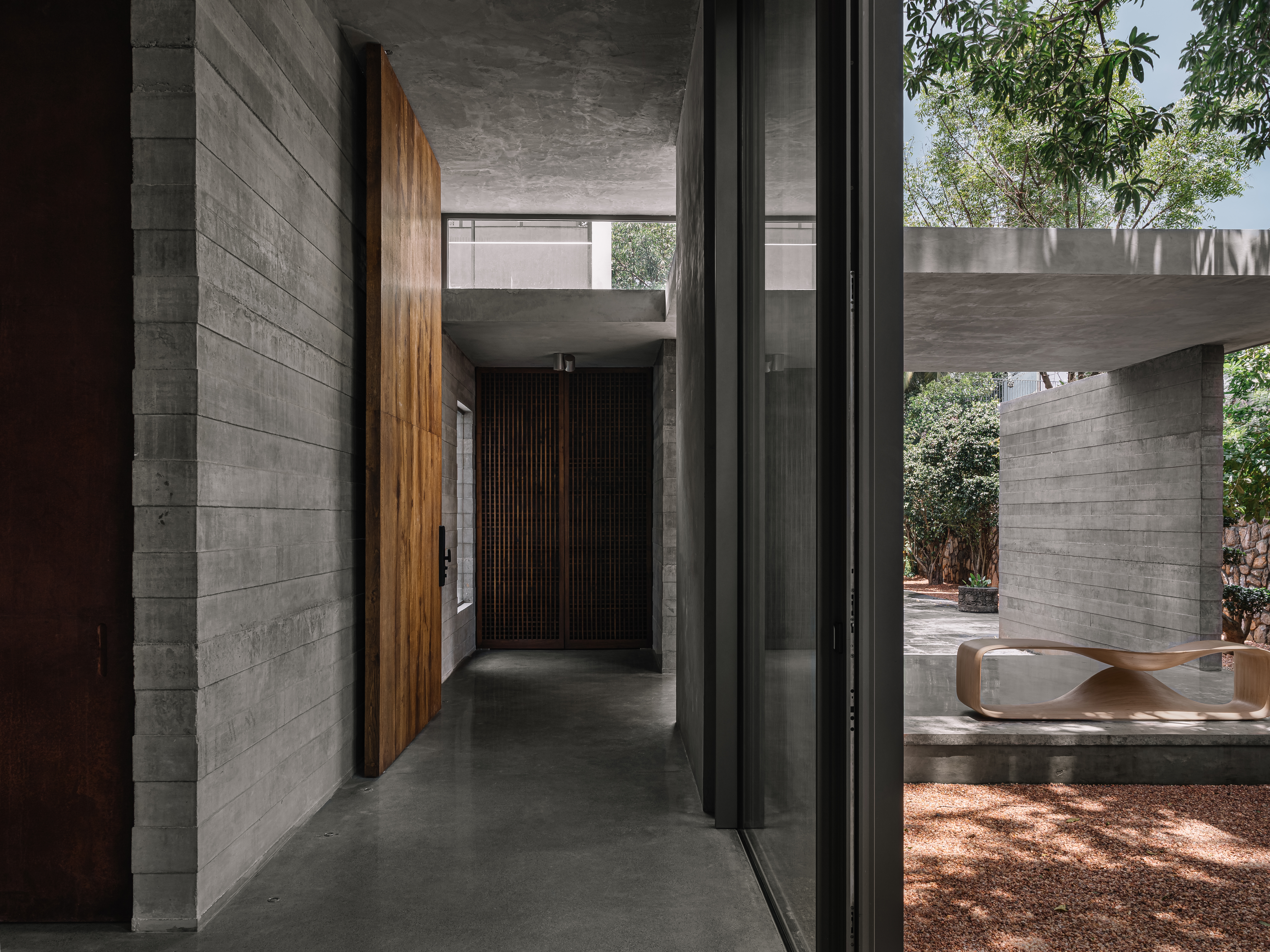
However, connecting these two zones created a planning issue. The transitional corridors became oversized, producing large, empty stretches that lacked spatial purpose. The project’s direction shifted during a design discussion when the client introduced a sculpture from his collection, Block VIII by French artist Delphine Brabant. The sculpture’s play of voids and projections offered a new way to resolve the emptiness. Instead of filling corridor space with additional program, Studio Nirvana carved it. Voids were cut into the oversized transitional zones, allowing trees to emerge through the architecture itself. This move transformed the corridors from circulation-only elements into spatial moments that actively integrate nature into the plan.
As a result, the trees became active participants in the architectural narrative. The layout evolved into a series of voids, projections, and shifting geometries, where built volume and open-to-sky breaks alternate to regulate openness, movement, and light. Nature is not framed as a view; it is embedded into the spatial structure of the home.
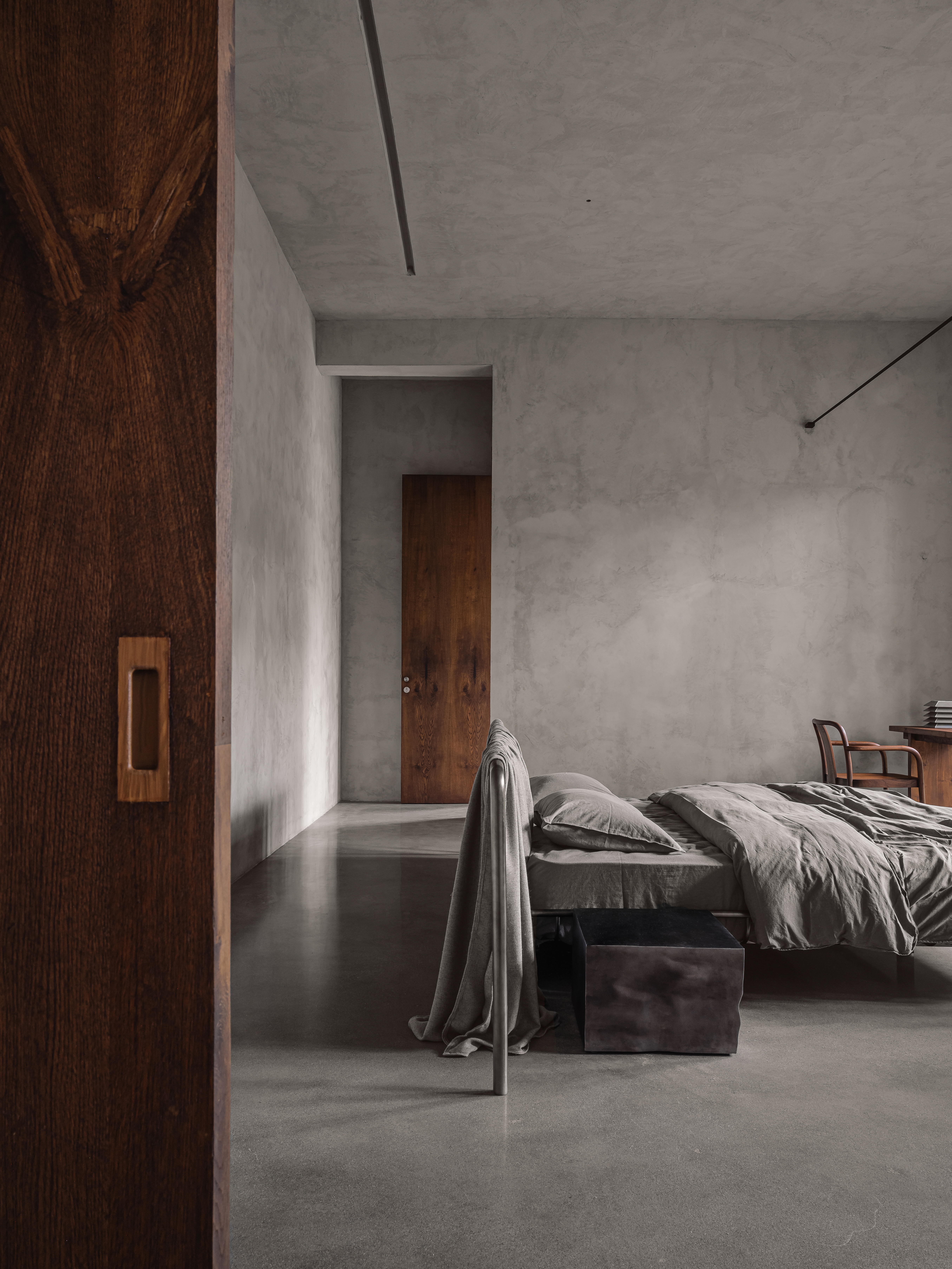
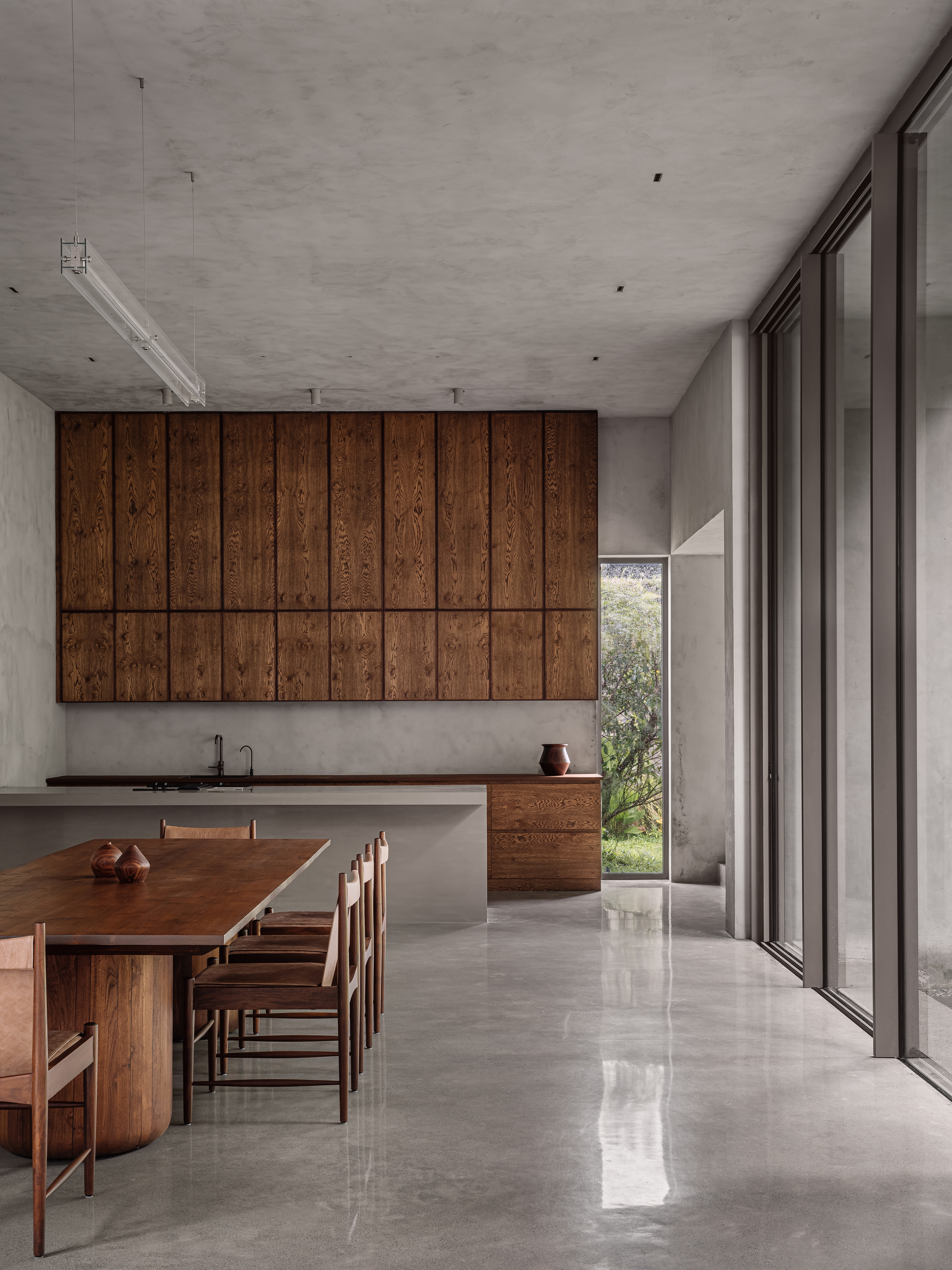
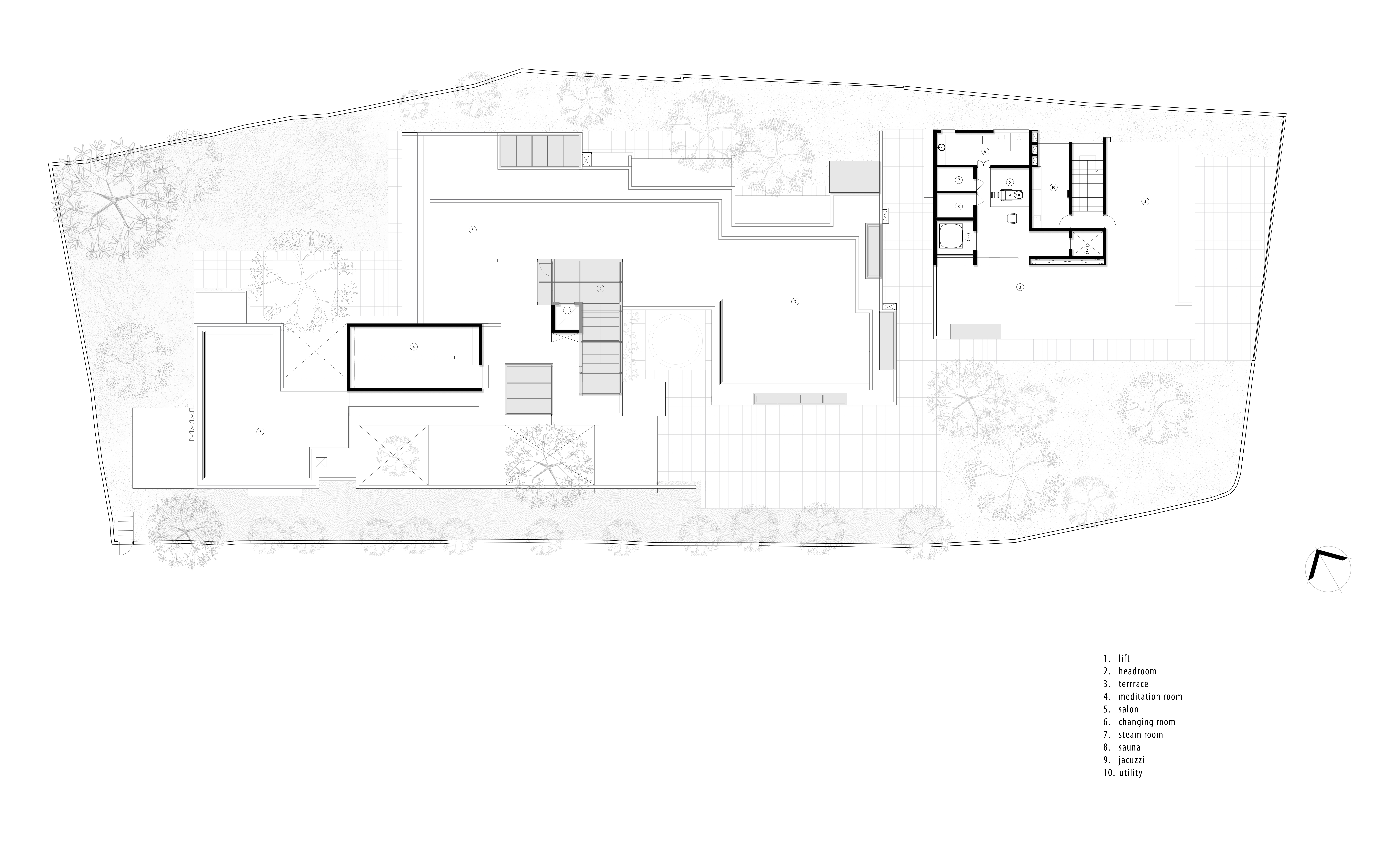


The main house spans approximately 15,000 sq. ft. and follows an open, intuitive plan. It includes five bedrooms, living spaces, a dining area with kitchen, an indoor pool, and a dedicated meditation room. Spaces are interconnected to encourage ease of movement and a continuous flow rather than a room-by-room experience. A defining design choice is the inclusion of several zones with no fixed function. These “unassigned” spaces were intentionally retained to maintain spatial openness and avoid over-programming. The result is a home that feels expansive without being busy, and calm without becoming empty in a meaningless way.
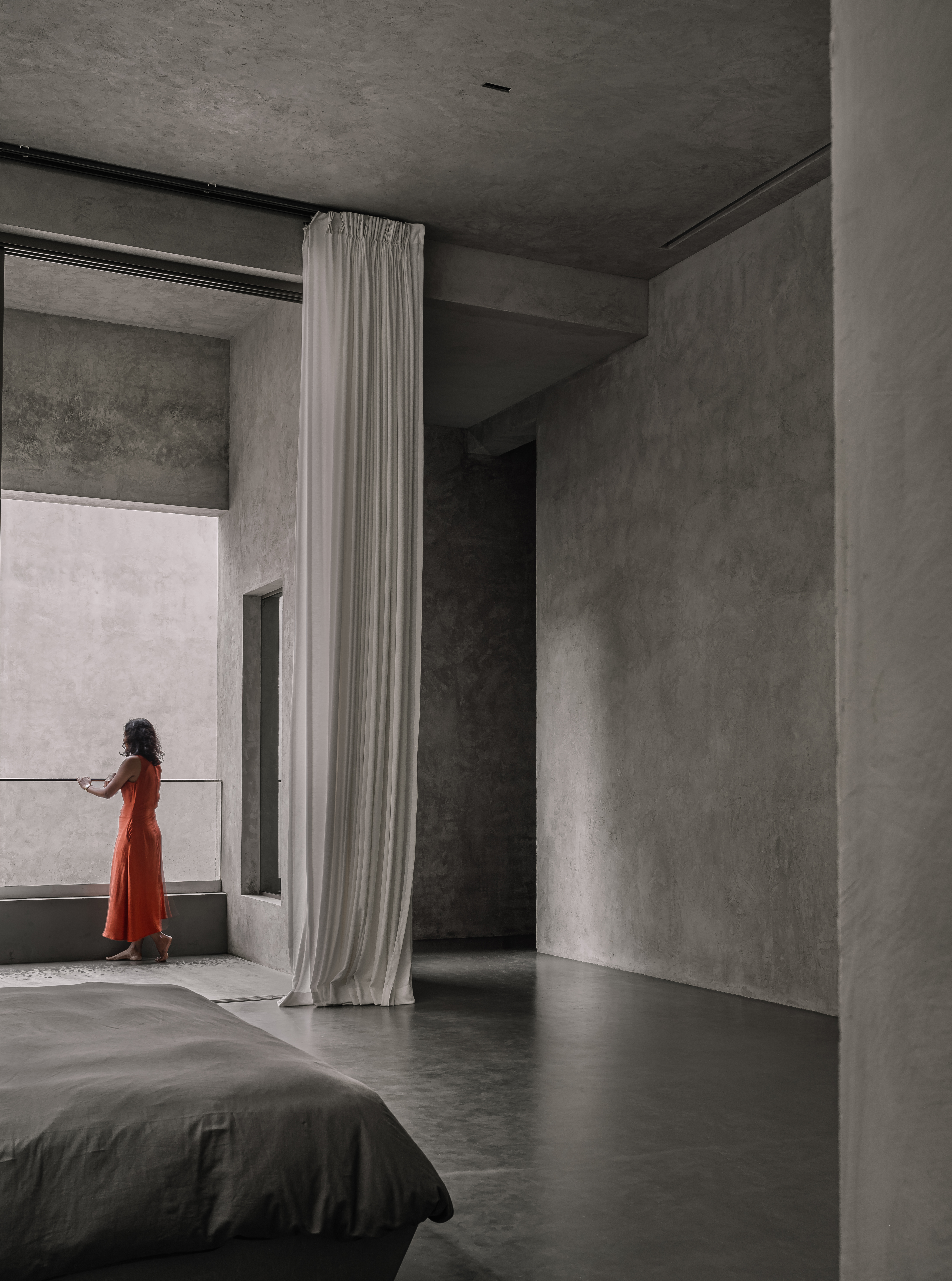
Natural light is treated as a key design material across the project. With courtyards and tree-filled breaks integrated into the layout, daylight is filtered through the leaves and canopy, producing a changing pattern of light and shadow throughout the day. This shifting interior atmosphere becomes part of the experience of occupying the house, reinforcing the project’s focus on subtle, long-duration comfort rather than short-term visual impact.
To meet the requirements of the brief, Studio Nirvana also developed an outhouse with a gym, spa area, and salon. This extends the total built-up area to approximately 20,000 sq. ft. and supports the home’s broader emphasis on wellness and restoration.
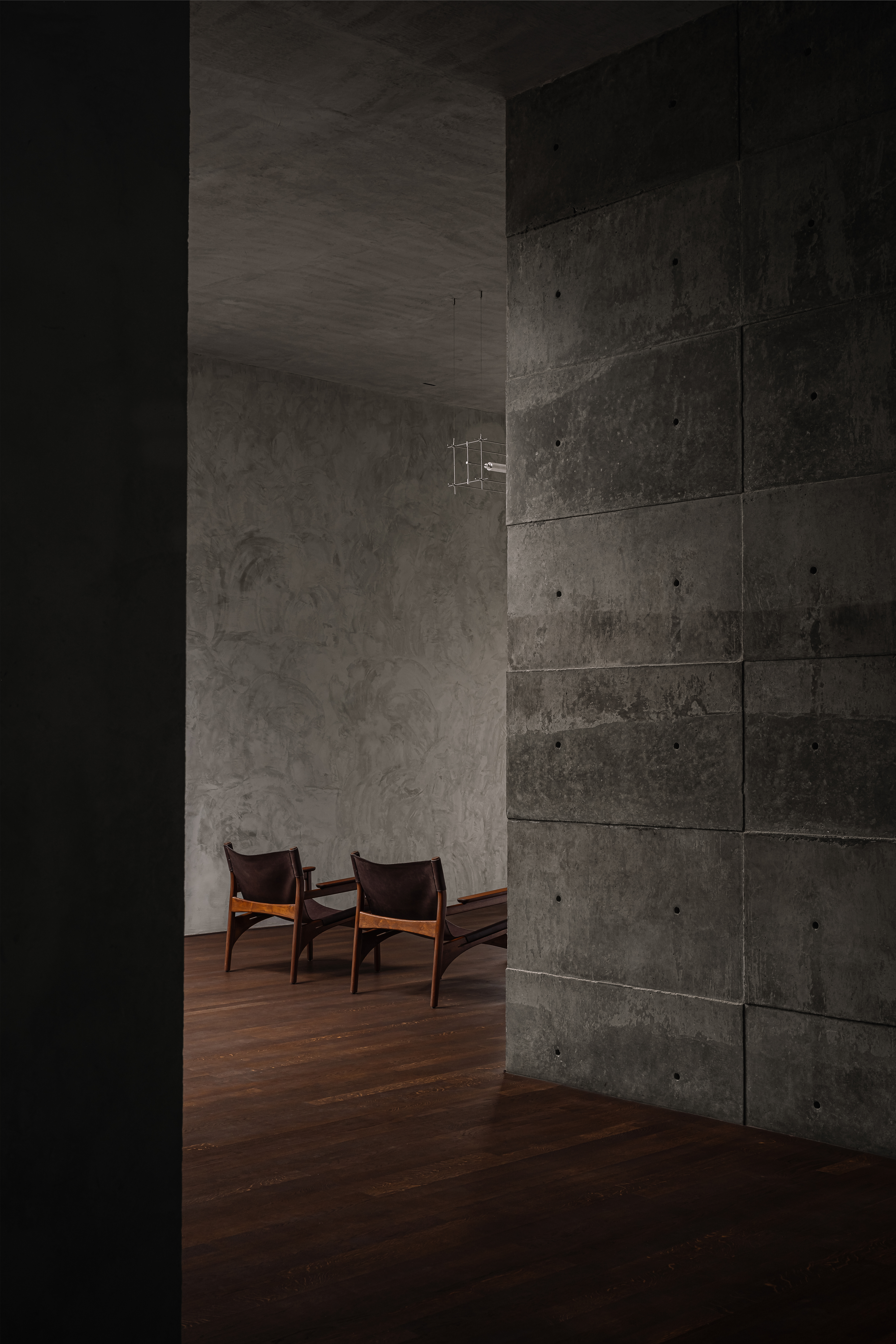
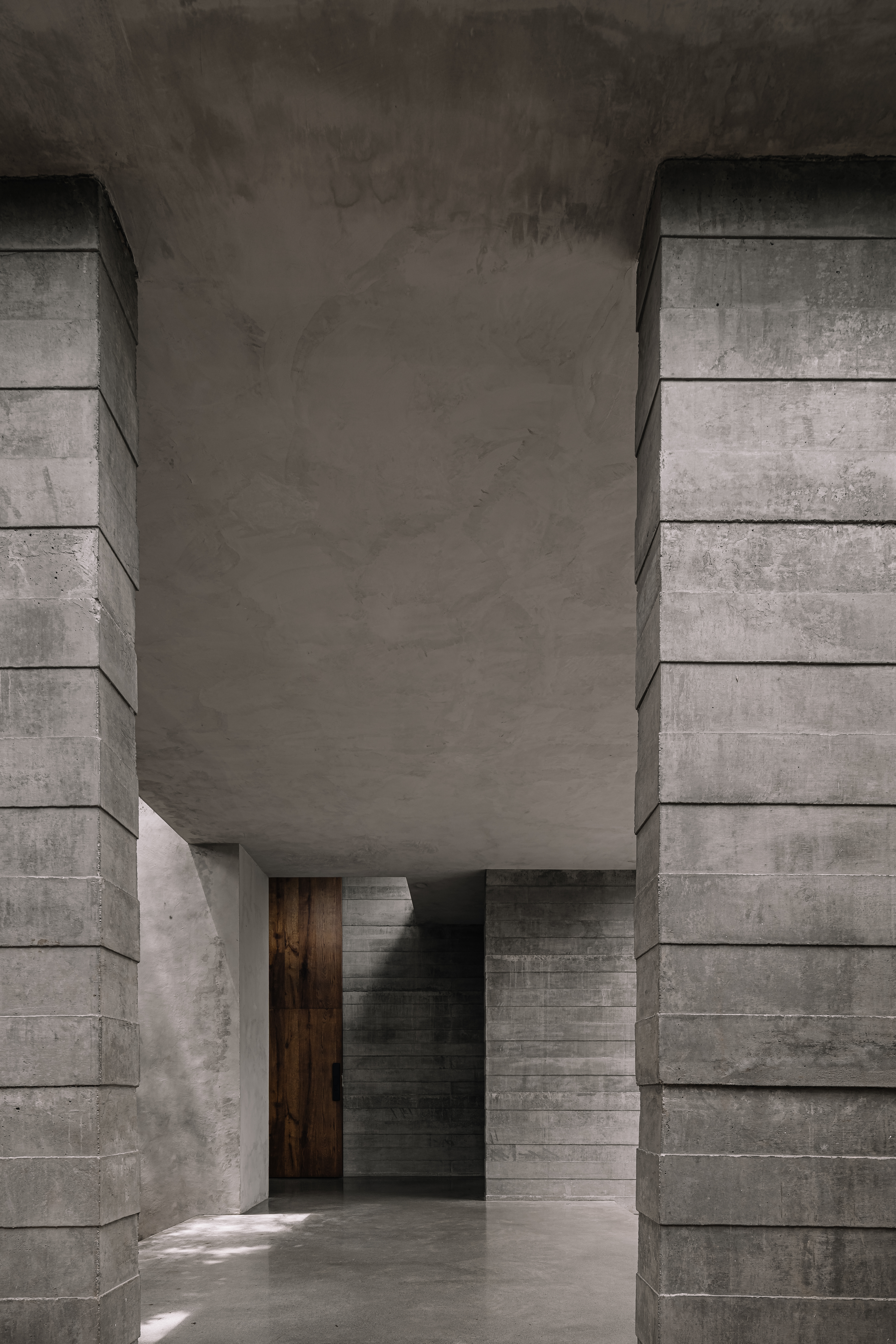
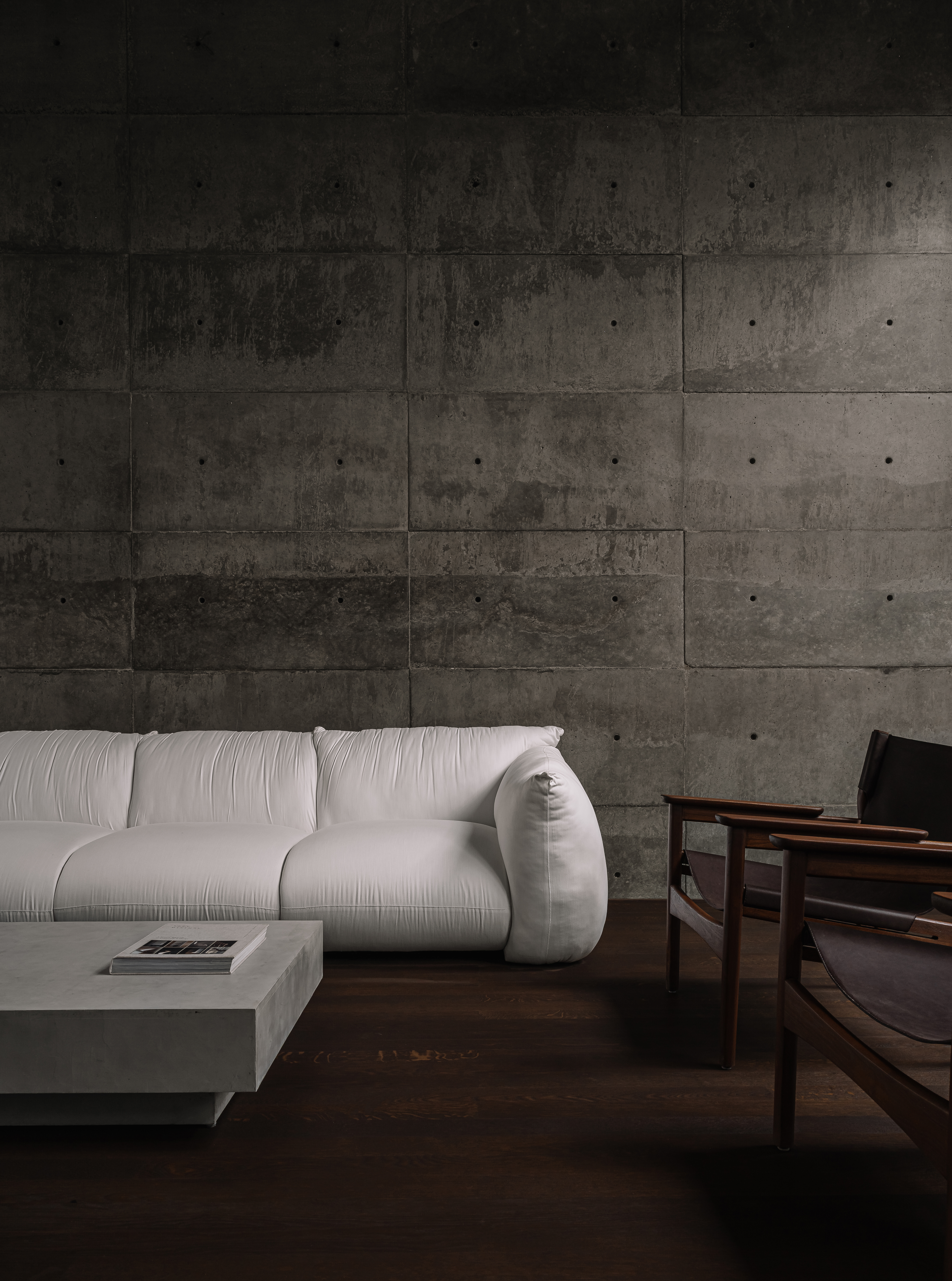
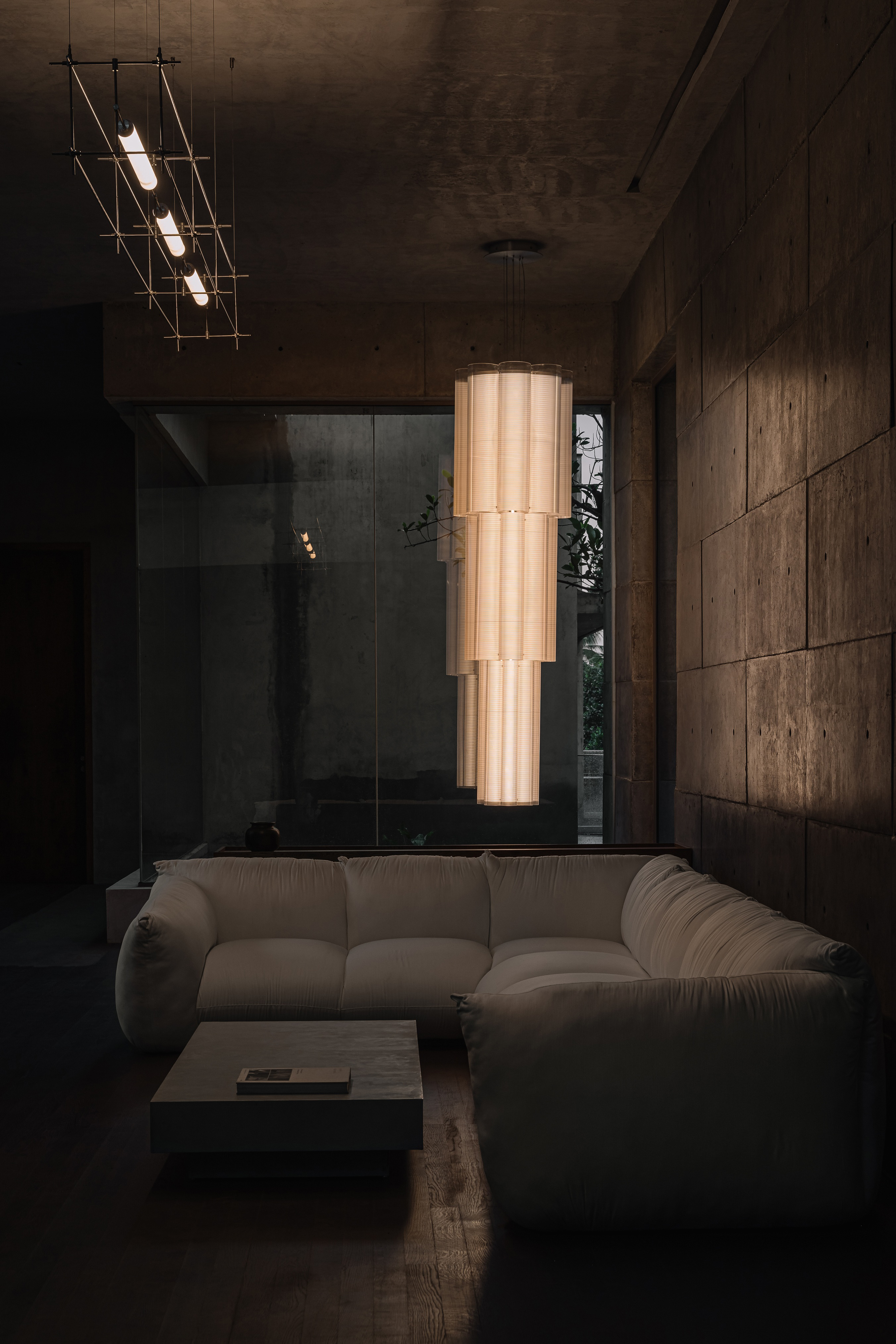
Material choices remain restrained and intentionally non-dominant. The palette is largely monochromatic and grounded in natural finishes that support a calm visual field. Grey tones form the base language of the architecture, complemented by warm wood accents that soften the overall atmosphere. In several areas, surfaces are coated in rough grey plaster, while selected portions of the structure are left as exposed concrete. The goal was to allow the volume and spatial geometry to remain the primary focus, without distraction from overly expressive surfaces.
The interior design process draws from mid-century modern planning clarity and Scandinavian functional restraint, reinforcing simplicity, form purity, and long-term usability. The execution was also shaped through close collaboration with vendors and makers, including furniture development, lighting design, and object curation. This collaborative approach enabled Studio Nirvana to refine details and align every component with the project’s architectural intent.
Zen House reinforces a belief we hold strongly at Bonafide: restraint is not minimal effort, it’s design maturity. Studio Nirvana chose to protect the trees as spatial anchors, treat emptiness as an architectural tool, and build calm through planning rather than decoration. The result is a residence that feels intentional, clear, and deeply livable. This is exactly the kind of design thinking we want to document and celebrate.
BONAFIDE is a digital design platform that goes beyond aesthetics. We spotlight the thinking, intent, and craft behind
meaningful design- not just the finished product. From architecture and interiors to product design and independent
brands, we cover work that challenges the norm and pushes ideas forward. Our content is visually sharp, editorially
bold, and purpose-driven. We ask better questions, tell smarter stories, and put creative minds in focus. If you’re
building something original with substance and clarity, we’re the platform that gets it, and tells it like it is.
BONAFIDE is a digital design platform that goes beyond aesthetics. We spotlight the thinking, intent, and craft behind meaningful design- not just the finished product. From architecture and interiors to product design and independent brands, we cover work that challenges the norm and pushes ideas forward. Our content is visually sharp, editorially bold, and purpose-driven. We ask better questions, tell smarter stories, and put creative minds in focus. If you’re building something original with substance and clarity, we’re the platform that gets it, and tells it like it is.
Get notified about new articles